Anglesey Factory & Shutdown Cleaning to Reduce Downtime and Improve Site Safety
Anglesey Factory & Shutdown Cleaning to Reduce Downtime and Improve Site Safety
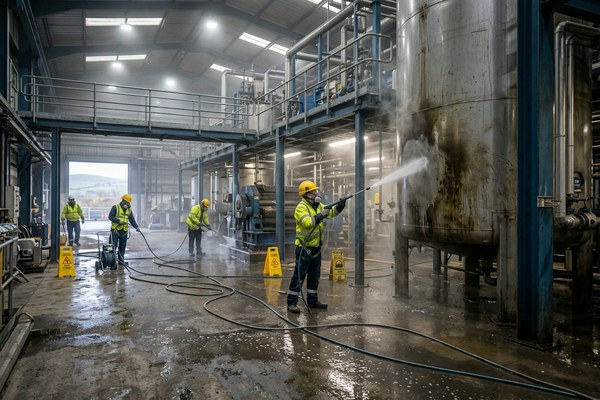
Factory & Shutdown Cleaning is one of those services that often looks simple from the outside but has a major effect on safety, compliance and uptime. ACS describes this service as a way to minimise downtime and maintain safe, compliant environments through efficient industrial cleaning during shutdowns and live operations. That positioning is important because buyers are rarely paying only for a clean surface. They are paying for access, planning, hazard control, efficient sequencing and a site that can return to work quickly.
In Anglesey and across North Wales, factories, process areas and marine-related facilities often operate under tight maintenance windows. If cleaning is badly timed, it can hold up inspections, delay repairs and extend shutdowns. If it is planned well, it can support maintenance, painting and compliance work in one controlled programme.
What Factory & Shutdown Cleaning usually includes
This service can cover machinery cleaning, process-area washdowns, removal of debris and contamination, high-level cleaning, shutdown support and preparation for maintenance or painting. The ACS homepage also confirms that shutdown work is completed within tight timeframes to ensure cleaning, preparation and painting are carried out efficiently.
Live-site cleaning versus shutdown cleaning
Live-site cleaning is usually planned around production needs, safety barriers and restricted work zones. Shutdown cleaning is different. It is normally deeper, broader in scope and more closely coordinated with engineering, inspection or coating work. The objective is to use planned downtime well rather than create new delays.
Why planned cleaning supports better uptime
A useful reference point comes from Clean360’s factory cleaning guide, which says daily cleaning should focus on high-traffic and high-touch areas, while more intensive cleaning sessions are best scheduled semi-annually or annually during planned downtime or shutdown maintenance. That aligns with how many industrial operators think about risk: routine cleaning keeps the site serviceable, while planned deeper interventions tackle the harder-to-reach contamination that can affect performance and safety. Clean360 also highlights that a clean factory supports worker health, reduces accidents, improves productivity and helps equipment run more effectively. Those are practical outcomes, not just housekeeping benefits.
Comparing common cleaning windows
Cleaning approachBest forMain advantageDaily or routine live-site cleaningFloors, touchpoints, light contamination and housekeepingKeeps operations safe without major interruptionPlanned shutdown cleaningHeavy machinery, process areas, deep contamination and linked maintenanceUses downtime efficiently and enables other worksAnnual or semi-annual deep cleanBroader resets of hard-to-reach areas and accumulated debrisSupports compliance, reliability and long-term upkeep
In many Anglesey facilities, the right answer is not one or the other. It is a layered cleaning plan where routine cleaning controls day-to-day risk and shutdown cleaning tackles the work that cannot be done properly while the site is fully operational.
What affects cost and programme
ACS does not promote a flat price for this work, and that is sensible. Factory & Shutdown Cleaning can vary widely depending on the process environment and the timing window. The main variables are usually:
size and layout of the facility
level and type of contamination
whether the site remains partly live
confined access or high-level cleaning needs
waste handling requirements
whether cleaning is coordinated with painting, repair or inspection work
A cleaning package that simply clears accessible surfaces is very different from one that supports a tightly managed shutdown with multiple trades, time-critical handovers and deep cleaning around plant. The more operationally sensitive the site is, the more important sequencing becomes.
How to plan a better shutdown in Anglesey
Buyers usually get better results when cleaning is planned as part of the maintenance programme rather than treated as an afterthought. For example, if a site needs cleaning, inspection and coating work, the order of operations should be agreed before access equipment arrives. That prevents double handling and reduces wasted time.
A practical planning sequence
Identify which areas must be cleaned for safety, access or inspection.
Separate live-site tasks from shutdown-only tasks.
Confirm whether repairs, coating or surveys follow immediately after cleaning.
Match labour, equipment and access to the critical path.
Build contingency for contamination levels that may be worse than expected.
This approach is especially helpful in coastal and industrial sites around Anglesey, where external contamination, plant grime and weather can all affect scheduling.
Why local industrial knowledge matters
ACS positions itself as working on demanding industrial environments across Anglesey and North Wales. That matters because industrial cleaning is not generic commercial cleaning. The contractor needs to understand isolation procedures, coordination with other trades, shutdown priorities, safe access and how to keep disruption controlled.
If the same contractor can also support surface preparation and industrial painting, the handover between stages is usually more efficient. That can reduce total downtime and make responsibility clearer.
Frequently Asked Questions
What is the main benefit of shutdown cleaning?
It allows deeper cleaning to happen during planned downtime, which can improve safety, support maintenance and reduce the risk of unplanned stoppages later.
Can ACS work on live industrial sites?
Yes. The homepage says work can be carried out in operational environments with careful planning to minimise disruption and maintain safety compliance.
How often should deep factory cleaning be planned?
A practical benchmark from Clean360 is semi-annual or annual intensive cleaning during planned downtime, though the right schedule depends on the process, contamination and compliance needs.
Does cleaning help with later painting or repairs?
Absolutely. Cleaning often creates the safe, accessible conditions needed for inspection, surface preparation and coating work.
Final thoughts: planned cleaning is usually cheaper than reactive disruption
Factory & Shutdown Cleaning in Anglesey should be viewed as a maintenance enabler, not just a support task. When it is built into the shutdown plan early, it helps other trades move faster, improves safety and reduces the chance that contamination or poor access will hold up the programme.
If you need a tailored plan for Factory & Shutdown Cleaning in Anglesey or North Wales, visit https://industrialpaintinganglesey.co.uk/ and request a quote from ACS for your site, shutdown window and maintenance scope.
