Anglesey Access & High-Level Work for Safer Maintenance on Difficult Industrial Structures
Anglesey Access & High-Level Work for Safer Maintenance on Difficult Industrial Structures
Access & High-Level Work is often the deciding factor in whether an industrial maintenance job in Anglesey runs smoothly or becomes expensive, delayed and unsafe. ACS describes this service as a way to safely complete work at height and in difficult access areas, including facades, roofs and complex industrial structures. On the same homepage, the company also confirms that it uses access solutions including MEWPs and scaffolding for high-level work, and that projects can be planned around live operational requirements to minimise disruption. For industrial buyers in Anglesey and North Wales, that combination matters. The challenge is rarely just the repair itself. It is getting competent people, equipment and materials to the workface safely and efficiently. https://industrialpaintinganglesey.co.uk/
Why access planning matters so much in Anglesey
High-level work becomes more demanding when structures are exposed, coastal, irregular or operationally sensitive. Industrial buildings in Anglesey can involve marine-facing elevations, tall cladding, roof edges, steelwork over active yards, and difficult-to-reach facade sections. Those conditions change how work should be priced, sequenced and supervised.
The HSE’s brief guide on work at height is a useful reminder of the stakes: falls from height remain one of the biggest causes of workplace fatalities and major injuries, and the regulations require that work at height is properly planned and carried out safely. That makes access selection a risk-control decision first and a productivity decision second. ## What Access & High-Level Work can include
On the ACS homepage, this service is positioned around difficult access areas such as roofs, facades and complex industrial structures. In practice, that usually supports related tasks such as industrial painting, inspections, cleaning, repairs, cladding work and local maintenance.
Common situations where access support is needed
painting high-level steel or cladding
inspecting corroded or weather-damaged areas
carrying out local repairs above production zones
accessing facades or roof edges without major disruption
maintaining hard-to-reach industrial or marine-facing assets
The key point is that access is not a standalone add-on. It is part of the method for delivering the work safely and on programme.
Comparing typical access methods
Access methodBest forMain advantageMain planning issueMEWPShort-to-medium duration high-level works with ground accessFast setup and efficient movementNeeds suitable ground conditions and spaceScaffoldingLarger or longer-duration projectsStable working platform for multiple tradesHigher setup time and costRope accessNarrow, awkward or elevated areas where other access is difficultMinimal footprint and strong reachRequires specialist competence and detailed planningLadder accessVery limited, low-risk short tasks onlyLow setup timeOften unsuitable for industrial maintenance scope
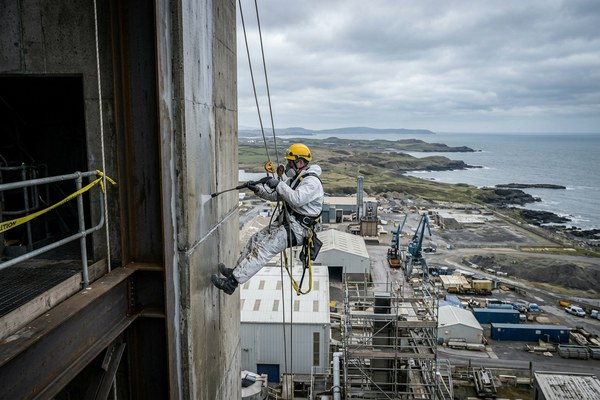
ACS specifically references MEWPs and scaffolding on the homepage, while the imagery and service style also clearly align with rope-access and difficult-access work. In Anglesey, the right method depends on height, duration, exposure, congestion and whether the area below remains operational. https://industrialpaintinganglesey.co.uk/
What affects cost and programme
ACS does not advertise flat prices for access-led work, which is sensible because cost is highly dependent on the job. A useful external benchmark comes from Halls Decorators’ 2026 commercial painting guide, which explains that height increases cost because higher buildings require more extensive access equipment, and that scaffolding, cherry pickers and specialist access platforms all add to project cost. It also notes that the duration of access hire directly affects total cost. For buyers in Anglesey, the main cost drivers are usually:
the access method chosen
the time required at height
whether the site remains live
wind exposure and external weather risk
the number of trades sharing the same access system
the complexity of rescue planning and supervision
Typical timeline expectations
A short local inspection or remedial task may be completed in a day or two if access is straightforward. A larger facade or roof-edge programme can run longer because access erection, exclusion zones, weather delays and phased handovers all affect the schedule. Exterior industrial projects in coastal North Wales should always allow some contingency for weather and safe working conditions.
Why access choice changes the quality of the outcome
Access is not only about reaching the work. It affects finish quality and productivity too. If operatives are stable, well-positioned and working from an access system that suits the task, preparation and coating application tend to be more consistent. If the method is a poor fit, work slows down and the risk of corners being cut goes up.
This is especially relevant for Anglesey sites where high-level work may support painting, repairs or cleaning in exposed conditions. A contractor that understands both the access method and the downstream trade is usually better placed to keep quality high.
What buyers should ask before approving the work
1) Is the access method right for the asset or just the cheapest option?
The safest short-term price is not always the lowest quote. A low-cost access plan can become expensive if it delays other work or forces repeated visits.
2) Can the site stay operational?
ACS says it can plan around live industrial environments to reduce disruption. That matters if the work area sits above active loading zones, plant or pedestrian routes. https://industrialpaintinganglesey.co.uk/
3) Does the access plan support the actual maintenance task?
Access should be chosen around preparation, repair or coating quality, not just around reaching the location.
Frequently Asked Questions
What does ACS include under Access & High-Level Work?
ACS describes it as safely completing work at height and in difficult access areas, including facades, roofs and complex industrial structures. https://industrialpaintinganglesey.co.uk/
Do high-level industrial jobs always need scaffolding?
No. ACS states it uses a range of access solutions including MEWPs and scaffolding. In some cases, rope-access methods or other specialist options may be better suited. https://industrialpaintinganglesey.co.uk/
Why is work at height planning so important?
HSE says falls from height remain one of the biggest causes of workplace fatalities and major injuries, so planning, supervision and correct equipment selection are critical. ### What causes prices to rise on access-led projects?
The biggest drivers are height, access equipment type, duration of hire, live-site restrictions, exposure and weather delays.
Final thoughts: safer access usually means better maintenance outcomes
Access & High-Level Work in Anglesey is not just a logistics issue. It is a core part of safety, programme control and workmanship quality. When the access method fits the structure, the site and the task, industrial maintenance is easier to deliver safely and with less disruption.
If you need high-level access support for industrial painting, repairs, inspections or maintenance in Anglesey or North Wales, visit https://industrialpaintinganglesey.co.uk/ and request a project-specific quote from ACS.
